ShopifyOctober 28, 202611 min readBy Truman
How to Choose a 3PL for Shopify: What Ecommerce Brands Should Look For
Almost every fulfillment provider can connect to Shopify. What matters is what happens after you connect it — inventory, bundles, returns, tracking, exceptions, and who you reach when something goes wrong.
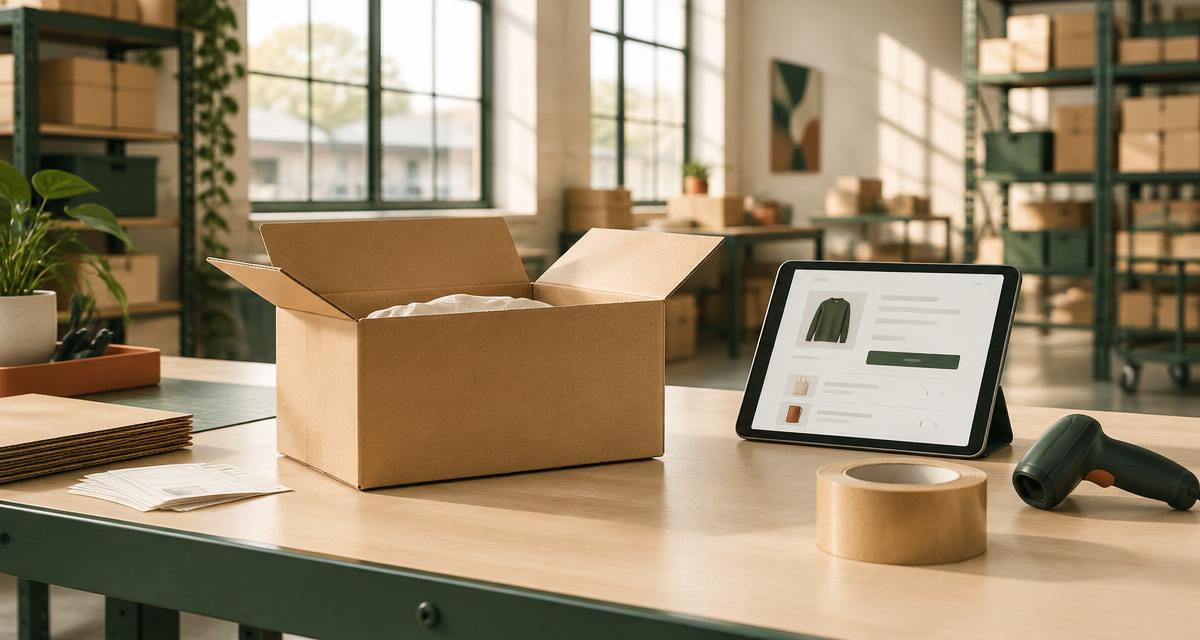
Connecting Shopify to a 3PL sounds simple.
A customer places an order. The warehouse receives it. They pick, pack, and ship it. Tracking gets sent back to Shopify.
And when everything is working properly, it should feel that simple.
The problem is that the quality of a Shopify fulfillment setup usually isn't determined by whether a 3PL can technically "integrate with Shopify."
Most established fulfillment providers can.
What matters is what happens after you connect it.
Does inventory stay accurate?
Do orders route correctly?
What happens when an order is edited or canceled?
Can the warehouse properly fulfill bundles?
How are returns handled?
Can you see what's happening without emailing someone at the warehouse?
What happens when you start selling internationally, through marketplaces, or wholesale?
Those are the questions that actually determine whether a Shopify 3PL relationship makes your operation easier or creates an entirely new set of problems.
Before choosing a 3PL for your Shopify store, here's what I would look at.
1. Start With the Shopify Integration
The first question is obvious:
Does the 3PL integrate directly with Shopify?
But don't stop there.
Ask how the integration actually works.
Shopify supports fulfillment services and apps that can receive fulfillment requests, manage assigned orders, update inventory, create fulfillments, and send tracking information back into Shopify.
For a normal ecommerce brand, you don't need to understand the APIs behind that.
You do need to understand the experience.
Ask the 3PL to show you:
- How a Shopify order enters their warehouse system
- How quickly new orders appear
- What information transfers with the order
- How fulfillment status gets sent back
- How tracking numbers return to Shopify
- How cancellations are handled
- How order edits are handled
- What happens when the integration fails
Ideally, the process is almost entirely automatic.
If your team regularly needs to export orders, upload CSVs, manually enter tracking numbers, or reconcile Shopify against a separate warehouse spreadsheet, something is wrong.
A good integration should remove work.
It shouldn't move the work somewhere else.
2. Understand Which System Controls Inventory
Inventory synchronization is one of the most important parts of the relationship.
Your warehouse knows how many physical units are actually sitting on the shelf.
Shopify needs to know how many units can still be sold.
Those numbers need to stay aligned.
Shopify can track inventory across locations, including third-party fulfillment locations, while connected fulfillment systems can push inventory changes back into Shopify.
That's the technology.
Operationally, there are more questions to ask.
What happens when:
- A pallet arrives with fewer units than expected?
- A unit is damaged during receiving?
- A return comes back and can't be resold?
- Inventory is quarantined?
- Someone discovers a count discrepancy?
- Inventory is being transferred?
- A warehouse employee accidentally adjusts a quantity?
You want to know how those events flow back into Shopify.
A 3PL telling you they have "real-time inventory" sounds good.
I would ask them to show it to you.
Pull up a SKU.
Compare what's in Shopify with what's in the warehouse management system.
Then ask what happens when the warehouse changes the count.
Inventory accuracy is not just a software feature. It is a combination of software, receiving procedures, cycle counts, warehouse discipline, and exception management.
3. Understand How Orders Get Routed
If all of your inventory sits in one warehouse, routing can be fairly straightforward.
As your fulfillment network becomes more complicated, it matters much more.
You might eventually have:
- A 3PL warehouse
- Your own location
- Multiple 3PL warehouses
- Retail stores
- Products fulfilled by different vendors
- Products that can't ship together
- International and domestic fulfillment locations
Shopify has order-routing functionality designed to determine which location should fulfill an order, and more complex setups can incorporate additional routing logic.
Before choosing your 3PL, think about where your business may be going—not just how it operates today.
Ask:
If I add another warehouse later, how will orders be routed?
Can some SKUs stay in-house while others are fulfilled by the 3PL?
What happens if one location doesn't have enough inventory?
Can an order split between locations?
What happens when a product is oversold?
You don't need a complicated multi-warehouse network just because Shopify supports one.
In fact, adding fulfillment locations too early can create unnecessary complexity.
You simply want a system that won't become a problem when your business grows.
4. Ask How Bundles and Kits Work
This is an area brands frequently underestimate.
Suppose you sell three individual products:
Product A Product B Product C
You then create a Shopify bundle containing all three.
From the customer's perspective, that's one product.
From the warehouse's perspective, somebody still needs to pick A, B, and C.
Shopify supports product bundles, including through its own Shopify Bundles app. Bundle availability can depend on the inventory of the individual component products.
Your 3PL needs to understand that structure.
Ask them:
- Does the bundle appear correctly in your WMS?
- Does the picker see the individual components?
- Does component inventory decrement correctly?
- Can you build bundles in advance?
- Can you also create bundles on demand?
- What happens when one component is out of stock?
- Is there a kitting fee?
- Can promotional inserts or free products be included?
- How are bundle changes communicated?
This gets even more important if your marketing team changes bundles frequently.
The worst outcome is having Shopify think you can sell 500 bundles while the warehouse only has enough inventory to physically build 100.
5. Look at Returns as Part of the Integration
Most brands spend much more time evaluating outbound fulfillment than returns.
Customers don't make that distinction.
A return is still part of the fulfillment experience.
Shopify supports returns workflows, and fulfillment/returns applications can interact with the order lifecycle and inventory records.
Your 3PL should have a defined return process.
Ask what happens from the moment a return arrives.
Does the warehouse:
- Identify the original order?
- Inspect the item?
- Photograph damage when needed?
- Record the condition?
- Return sellable inventory to stock?
- Quarantine damaged inventory?
- Update inventory correctly?
- Notify your team?
Most importantly, who decides whether something is resellable?
That should normally be based on rules you establish with your fulfillment partner.
For example:
Unopened product → restock.
Opened product → quarantine.
Damaged packaging → photograph and request instructions.
Unknown return → hold for review.
You don't want every warehouse employee making subjective decisions about your products.
6. Make Sure Tracking Flows Back Into Shopify
Tracking should not require manual work.
After an order ships, the carrier and tracking number should flow back into Shopify so the order can be updated and the customer can receive the appropriate shipping notification.
But again, ask to see it.
Does Shopify receive:
- Carrier
- Tracking number
- Fulfillment status
- Partial fulfillment information
- Multiple tracking numbers when necessary
Also ask what happens when an order uses multiple boxes.
Shopify's fulfillment model can support orders with multiple fulfillment groups or delivery methods, which is one reason your 3PL's integration needs to properly communicate the actual fulfillment—not simply mark the entire Shopify order "shipped."
Good tracking integration reduces "Where is my order?" support tickets and gives your customer-service team visibility without logging into the warehouse system every time someone emails.
7. Think About Shopify Markets and International Orders
If you currently ship only within the United States, international fulfillment may not feel important.
That can change quickly.
Shopify Markets lets merchants customize things such as currency, language, pricing, product availability, taxes, and other elements for different markets.
Your 3PL doesn't need to manage your Shopify Markets strategy.
But it does need to correctly execute the orders that strategy creates.
If international expansion matters to you, ask:
- Which international carriers do you use?
- Which countries can you ship to?
- How are customs documents generated?
- Where do HS codes come from?
- How is country of origin handled?
- Can your system distinguish DDP and DDU/DAP shipments?
- How are duties and taxes communicated?
- What happens when an international shipment is rejected or returned?
"International shipping available" is not enough.
A warehouse shipping one package to Canada every few months is different from a fulfillment operation designed to support a meaningful international customer base.
8. Don't Forget Your Other Sales Channels
Shopify may be the center of your ecommerce operation today.
It might not be your only channel tomorrow.
You may eventually sell through:
- Amazon
- TikTok Shop
- Faire
- Walmart
- Retailers
- Distributors
- Wholesale customers
- Your own sales team
A good 3PL should help consolidate that fulfillment rather than forcing you to manage completely separate operations.
Ask which channels integrate directly with the warehouse management system.
Then ask how inventory stays synchronized across those channels.
If Shopify says you have 200 units available, Amazon thinks you have 200, TikTok thinks you have 200, and all three platforms are simultaneously selling against the same physical inventory, you need a system capable of keeping those channels aligned.
This is where the underlying warehouse technology matters as much as the Shopify connection itself.
9. Understand the Difference Between DTC and Wholesale
A warehouse that can ship Shopify orders is not automatically good at wholesale fulfillment.
Direct-to-consumer fulfillment might mean:
Pick one item.
Put it in a mailer.
Print a UPS label.
Ship it.
Wholesale can involve:
- Master cartons
- Case quantities
- Pallets
- Retailer-specific carton labels
- Routing guides
- Advanced Shipping Notices
- EDI
- Packing slips
- Appointment scheduling
- FBA preparation
- Retail compliance requirements
If wholesale is part of your growth plan, ask about it before signing.
You don't want to discover after landing your first major retailer that your 3PL can't support the retailer's routing requirements—or that every wholesale order is being treated as a custom project.
10. Ask About Order Cutoff Times and SLAs
Technology doesn't matter much if the warehouse doesn't ship the order.
Ask for the actual operational commitment.
For example:
Orders received before 1:00 PM Central are processed and tendered the same business day.
That's measurable.
"We generally ship quickly" isn't.
Ask:
- What's your same-day cutoff?
- What counts as an eligible order?
- What happens during peak season?
- How is on-time performance measured?
- What is your fulfillment accuracy?
- What happens when an SLA is missed?
- What happens when Shopify sends an order with incomplete information?
I'd also distinguish warehouse fulfillment speed from carrier transit time.
If your warehouse receives the order at 10 AM and hands it to UPS at 3 PM, the warehouse has done its job.
If UPS delivers it three days late, that's a different problem.
Your agreement should make that distinction clear.
11. Ask to See the Actual Software
This might be my favorite piece of advice when evaluating a 3PL.
Don't settle for:
> "Yes, we integrate with Shopify."
Ask them to open the software.
Then give them scenarios.
Show me a Shopify order coming into the warehouse.
Show me where my inventory appears.
Show me how I know whether an order shipped.
Show me a return.
Show me an inventory adjustment.
Show me a bundle.
Show me a failed order or exception.
Show me the reports I would have access to.
A 15-minute live walkthrough can tell you considerably more than a page of integration logos.
I've worked on the 3PL side long enough to know that the normal orders are rarely the problem.
It's the exceptions that reveal whether the operation is actually well designed.
12. Understand Who You Talk to When Something Goes Wrong
This isn't technically a Shopify feature.
It may matter more than most of them.
Your integration will eventually have an issue.
An order will look wrong.
Inventory won't match.
A promotion will unexpectedly generate thousands of orders.
A SKU mapping will need to change.
You'll have a customer escalation.
Who do you contact?
A ticketing system?
A general support inbox?
An account manager?
Someone physically inside the warehouse?
Ask how quickly you can reach a human who understands your account.
The larger your brand becomes, the more valuable that becomes.
Software is great at automating normal operations.
People still solve abnormal ones.
13. Get the Full Pricing Before You Compare Providers
Two Shopify 3PLs can quote the exact same pick-and-pack rate and have completely different total costs.
Look beyond the headline fulfillment fee.
Ask about:
- First pick
- Additional items
- Storage
- Packaging
- Receiving
- Returns
- Kitting
- Special projects
- Wholesale
- FBA preparation
- EDI
- Account minimums
- Software fees
- Integration fees
- Shipping
- Postage markup
- Peak surcharges
Then give each provider the same historical order data and ask them to estimate what an actual month would have cost.
That's a much better comparison than asking:
> "What's your price per order?"
The cheapest pick-and-pack rate does not necessarily produce the cheapest—or best—fulfillment operation.
A Shopify Integration Is Only the Beginning
If I were choosing a 3PL for a Shopify brand, I wouldn't spend much time asking whether they "work with Shopify."
That's the minimum requirement.
I'd want to know whether they can reliably support the way my business actually operates.
Can orders move automatically?
Does inventory stay accurate?
Can they handle bundles?
Can they process returns properly?
Does tracking flow back?
Can they support international orders?
Can they grow into wholesale and additional sales channels?
Can I see what's happening?
And when something goes wrong, can I quickly reach someone who can fix it?
Shopify has become powerful enough to support increasingly complicated commerce and fulfillment setups. The 3PL you choose should make that infrastructure easier to use, not become the weakest link in it. Shopify itself recommends evaluating 3PLs based on factors including service levels, pricing, reporting, communication, delivery expectations, and integration capabilities—not simply whether an integration exists.
The best fulfillment relationship is one you don't have to think about very often.
Orders come in.
Inventory stays accurate.
Packages go out.
Customers get tracking.
And your team spends its time growing the business instead of managing the warehouse.
Choosing a Shopify 3PL?
Packed Fulfillment works with growing ecommerce brands across Shopify and other major sales channels, with direct warehouse communication, transparent pricing, inventory visibility, and fulfillment designed around the way each brand actually operates.
If you're comparing fulfillment providers, send us a recent month of order data. We'll review your volume, SKU profile, packaging, storage, shipping, and any wholesale or value-added requirements and build a straightforward fulfillment quote around your actual business.